

Your website structure is a crucial step in getting your conversion and SEO in order. Why this is important and how to take a critical look at it I’m happy to explain!
The road to conversion
Let’s start with this “universal truth” about conversion; fewer steps your visitor has to go through and clear navigation makes for more conversion. Clear navigation for sure, fewer steps I don’t quite agree. Minimizing the amount of steps does.
Some conversions once require more steps than others. The complexity of your product/service has a lot of influence on this. So as far as I’m concerned, “A clear navigation and no unnecessary steps leads to more conversions”.
Setting up content
One of the important considerations when creating a website is the arrangement of all your content – or in other words; what goes where in your website. If you have a small website with a few pages, this is not a big issue, but as your website gets larger you’ll want to put it into logical “bins. Sorted or arranged based on your visitors needs. Think about what makes for a logical sorting of your content. This can be based on audiences, services, need, technologies, wants, etc. Most importantly, organize it based on your visitor, not on personal preference or how you organize things internally.
Tip: Test the sorting with some people you don’t work with, if it makes sense to them then you are on the right track. A great alternative is to discover and set this up with a web agency.

Limit menu items
Is your furnishing in order? Then my next question is; can you do less? Can you summarize content into logical themes to narrow down the choices for the visitor a bit? You also want to carefully consider whether menu items are unique enough from each other. The last thing you want is for the visitor to have doubts about clicking, chances are they will drop out.
Search function in your website
Whether your Web site needs a search function depends on the size and type of Web site you have. Ideally, you don’t need a search function because visitors can find a logical path through the site. But if you have a website consisting of reference books, then of course it’s a different story. Is the focus on conversion? Then the search bar shouldn’t be necessary, or you still need to simplify your navigation and structure.
The shortest path
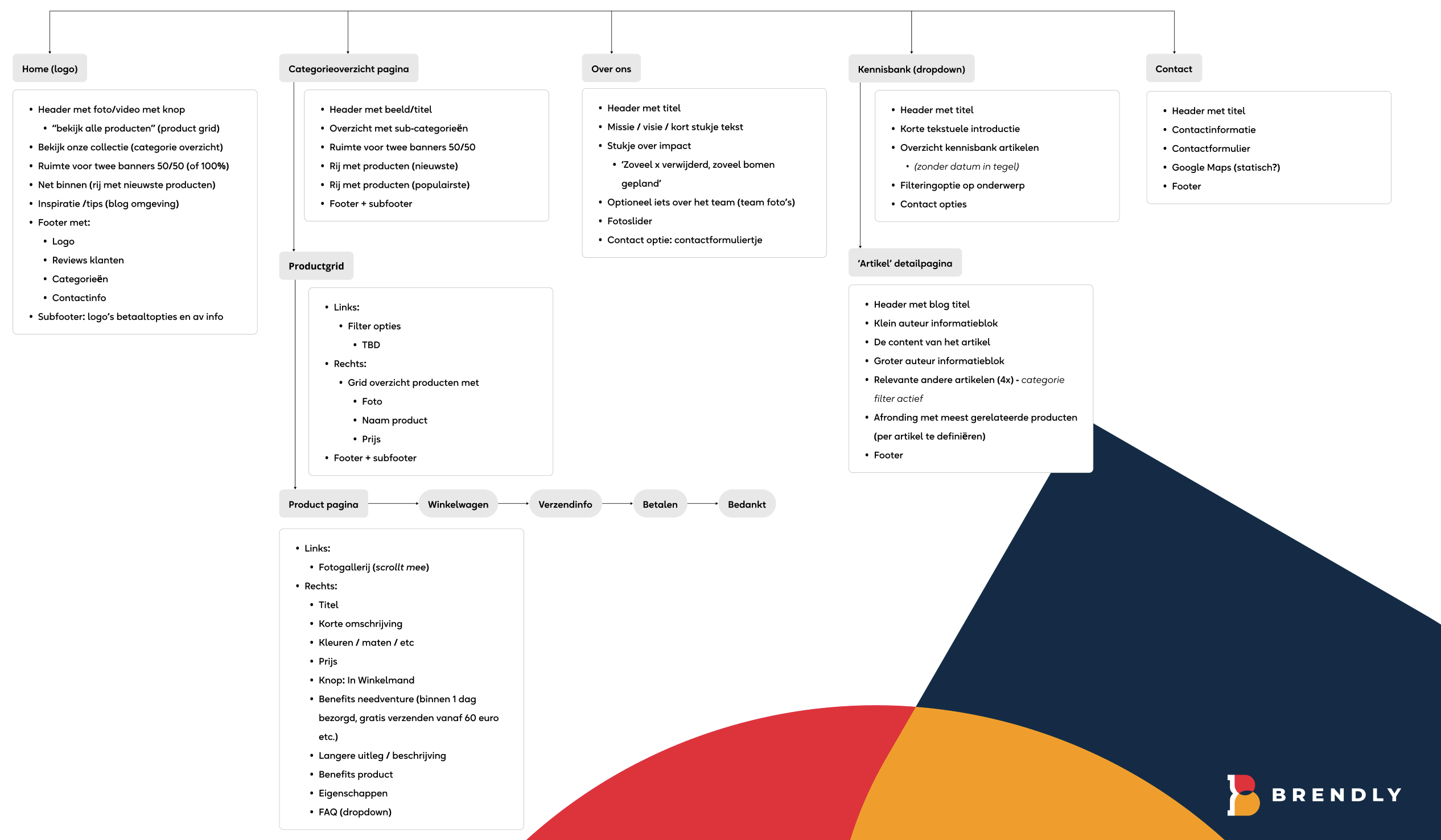
After the pages have a logical layout, the paths to conversion should be easy. A good experiment is to work out each page of your website in a sitemap and indicate for each page what components are present on it. For each component, you can then also link to other pages. This way you visualize the possible “flows” your visitors can go through without navigating through the main menu.
Again, this is fine to test with people you don’t work with. Again with the goal of seeing if it makes sense.
Consistency structure
As you start using the website more(especially with marketing in mind), chances are that new pages will be added. Make sure this always fits into the current structure or adjust your website structure so that new content becomes a logical part of your website. Nothing is more illogical to your visitor than websites that are set up non-hierarchically. This feels like a sloppy website, with all its consequences.
Call to actions in navigation and sticky navigation
Small point, but important enough to get its own heading. Place a call to action in your navigation; this will help your conversion rate. Think about what is a logical next step for your website visitors – not necessarily what you want the visitor to do. Rather a “small” conversion than no conversion.
Furthermore, my view is that the menu should be “sticky. This means that the menu should scroll down with the user and always be visible. I have two reasons for this. First, a customer can easily find their way back through the menu; second, conversion points are visible at all times.
Internal structure for SEO
A good structure (and conversion) indirectly has a positive effect on your SEO. Ranking occurs in part based on usage signals, think:
- How many people leave immediately
- How long people stay on the site
- How high their interaction level with a page
You can read more about “user signals” here. The fact is that you want to set up your website for easy navigation. Better for conversion and therefore SEO.
Crawlability
A website that is “crawlable” is about more than just a robots.txt that is properly set up. It’s about a logical layout that the bot understands. Google spends a lot of time developing bots that view Web sites the way humans do. One reward of their efforts is to show the most appropriate Web sites first. Another reason to think carefully about your Web site structure.
Want an audit of your current navigation and suggestions for improvement? Let us know, we’d love to help you out!
Why is a good website structure important?
How do I set up my website based on visitor needs?
Should I have a search function on my website?
What is the advantage of a sticky menu?
How do I keep the structure of my website consistent?
How do I improve conversion paths on my website?
Visualize per-page sections and link them to relevant follow-up pages. That way you’ll find out if visitors can follow logical paths without having to navigate through the main menu. Test this with people outside your team.